

An ecommerce website development quote should describe what will be delivered, who does each part of the work, which costs recur and what qualifies as acceptance. Compare vendors by giving them the same project brief. Two totals are hard to compare if one includes catalogue cleanup, payment testing and handover while the other assumes your team handles those jobs.


Give every vendor the same inputs
Describe your buyers and channel mix
A quote for a direct-to-consumer store should reflect product discovery, variants, checkout and returns. If you sell to retailers as well, tell the agency whether wholesale buyers need separate prices, bulk ordering or approvals. Give a sample order from each channel. These examples help a developer distinguish between a standard feature and a requirement that needs additional configuration or custom work.
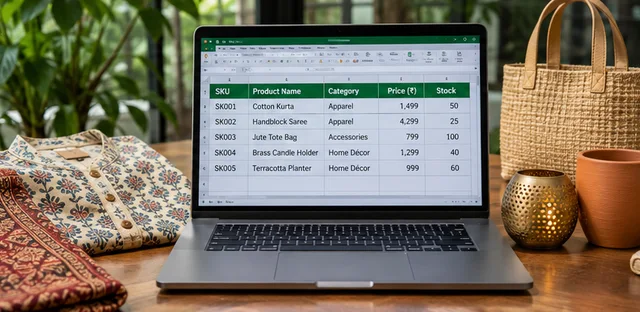
State where you deliver, which payment methods you use and which team maintains availability. Share a clean sample product sheet with images and variants. A vendor can then estimate the effort for a catalogue import and flag data issues early. An estimate based on one simple SKU can miss the work for products with multiple options or regional prices.
What a useful development estimate includes
Separate storefront design from catalogue work
Ask which screens are designed, including collections, product pages, account screens and the cart, and where a standard theme component will be configured. Define the number of feedback rounds and the approval owner. For catalogue setup, check whether the agency will import clean files, edit descriptions, resize images or fix duplicate records. These are separate deliverables.
Use a simple estimate table with columns for deliverable, quantity, inputs, owner, acceptance criteria and exclusions. For example, “import 500 clean catalogue records” still needs decisions about variants, replacement images, final errors and whether your team provides a verified spreadsheet.
Identify integration boundaries
Ask what the quote covers for payment, shipping, inventory, invoices and CRM. “Gateway integration” might mean activating an existing module, or it might include testing failures, refunds, notifications and order reconciliation. “Inventory sync” should specify source data, sync frequency, how errors are handled and who can reprocess failed updates.
- List which integrations use standard connectors and which need custom work.
- Document who supplies sandbox access and how long that dependency can delay testing.
- Ask for a sample reconciliation or export your team can review.
- Identify changes that would require a revised estimate, such as adding a warehouse.
- Confirm which external vendor subscriptions and transaction costs are billed to you directly.
Compare one-time and recurring charges
One-time work may include discovery, design, setup, product migration, configuration, testing and deployment. Recurring expenses can include platform subscription, hosting, apps, plugins, licenses, backups and a support retainer. Payment processors and carriers can charge based on transactions and shipment volume. Request the current charges from the providers that actually bill them, since those rates may change.
Build a year-one estimate based on the store you expect to run. If your catalogue will grow or you plan to expand to new markets, note which charges are sensitive to volume. For example, a shipping service might charge differently when multiple dispatch locations are enabled, while an automation platform may charge by task count. Keep provider rates and assumptions with the quotation rather than embedding indicative costs in the development statement of work.
Define a clear scope for SEO and migration
For an existing store, ask how URLs, redirects, page titles, canonical tags and XML sitemaps will be handled. Specify who exports the old page list and who tests the redirect map. A new design may preserve the same platform and URLs, or it may require moving data and changing route structures. Those are different projects.
Separate technical work from content production and ongoing SEO. Confirm whether the agency will write product descriptions or simply migrate supplied copy. Clarify who runs launch checks, which reports you receive and who investigates unexpected indexing or traffic changes. Treat measurements as acceptance evidence where appropriate, using scenarios the team can reproduce before launch.
Build milestones around acceptance
Define a finish line for each stage
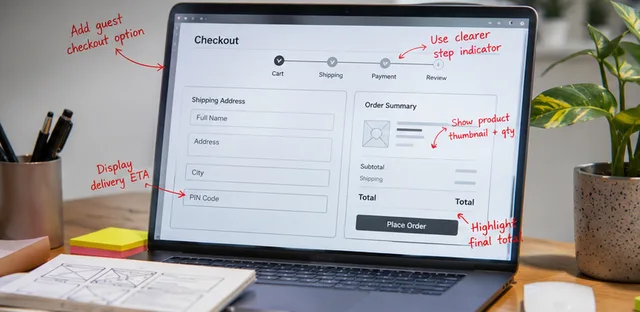
For discovery, accept a documented brief with identified dependencies. For design, review the relevant mobile and desktop templates and approve the key actions. For development, agree a weekly or milestone-based demo using realistic data. Before launch, sign off on the actual purchasing flow, order emails, returns, and account access.
Tie payment milestones to those outcomes and include a way to record scope changes. The change record can say what changed, who requested it, the cost, timetable impact and whether it affects work already accepted. An early warning about uncertainty is valuable when it names the decision required and the cost of resolving it.
Example of a fair side-by-side comparison
Imagine two quotes to move 500 products. One covers a clean spreadsheet import with two variants per product and tests errors on a sample. The other covers cleansing duplicate SKUs, cropping images, preparing redirects and migrating order records. Ask the first vendor to quote the additional work or ask the second to break those items out. Then score each response on clarity, work quality, operational support and cost for the same scope.
If the budget is tight, separate launch essentials from later features. You might launch with a single warehouse and keep complex replenishment reports for phase two. Preserve key URLs and a reliable checkout from day one because those choices are harder and more disruptive to repair after launch.
Questions to ask before signing
- What accounts, assets and source code will the business control at handover?
- How do you classify a defect compared with a request to change the agreed design?
- Who approves integrations, refunds and launch checkout evidence?
- Which costs repeat and where can the business check their current price?
- What support is included after launch and how are urgent issues escalated?
Keep the contract, estimate and approved scope together. Before deciding, ask each vendor to demonstrate how the store will operate through two or three real orders and a return. Clear acceptance criteria help both parties deliver to the same expectation.
Document what your business must supply
List dependencies such as product photography, policy approval and courier credentials with dates and owners. Ask which parts of the schedule can proceed while you wait for a third party. A quote with a clear dependency list helps your team coordinate work before an omitted input delays the release.